Best Fruits to Buy Frozen, Not Fresh (Backed by Science)
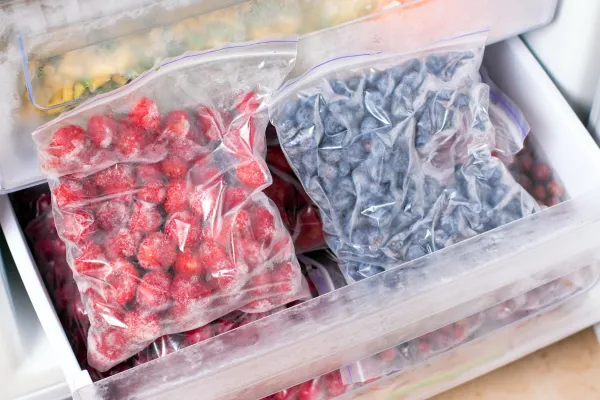
Quick answer: The best fruits to buy frozen are berries, cherries, mango, pineapple, peaches, cranberries, and pomegranate arils. Frozen fruit is picked ripe and frozen within hours, so it usually holds its vitamin C and antioxidants as well as — or better than — fresh fruit that has traveled and then sat in your fridge for days. It also costs less, keeps for months, and makes steady-energy eating a whole lot easier.
Let me guess. You have a mental rule that says fresh is always healthier than frozen, and you feel a little guilty every time you reach past the produce section for a bag in the freezer aisle. I hear this from women constantly...I used to BE one of those women! It's one of those food beliefs we never questioned because it just sounds right.
Here's the thing though: for most of the fruit most of us actually buy, that rule has a big asterisk on it. And once you understand why, your freezer becomes one of the most useful tools you have for eating well in midlife — for your energy, your blood sugar, and your grocery budget all at once.
Is frozen fruit really less nutritious than fresh?
No — and the research is surprisingly clear. When food scientists at UC Davis compared fresh and frozen versions of the same eight fruits and vegetables, the frozen samples held onto their vitamins just as well as fresh, and in several cases held more. Vitamin C, in particular, was equal or higher in the frozen fruit.
So where did the myth come from? I think we quietly confused two very different things. Fruit picked ripe off your own tree or a farm stand at peak season really is the top of the heap — nothing beats it. But that's not what's in the average grocery store clamshell. That fruit was picked early, packed, shipped, and stored, and it has been slowly losing nutrients the whole way. When people say fresh is best, they're picturing the farm stand. What they're usually buying is something else entirely.
Frozen fruit skips that slow decline. It's harvested ripe and flash-frozen within hours, which essentially hits pause on the nutrients right at their peak. A separate study looking at total phenolics, fiber, and minerals found the same pattern: for most fruits, frozen and fresh came out about even.
Why does 'fresh' fruit lose nutrients before it reaches your plate?
Because time and temperature are quietly working against it from the moment it's picked. Most fresh fruit is harvested before it's fully ripe so it can survive the trip to your store. Then it spends days — sometimes weeks — in transit, in storage, on the shelf, and finally in your fridge. Delicate nutrients like vitamin C drain away that entire time.
My favorite study on this actually built a category for real life. Researchers created a 'fresh-stored' group — fruit kept in the fridge for five days, the way most of us actually treat it — and compared it to frozen. Their conclusion was: fresh produce loses vitamins during refrigerated storage, while the frozen versions hold onto them equally well or better. When there was a meaningful difference, frozen won more often than fresh did.
Vitamin C is the canary in the coal mine here. It's water-soluble and sensitive to light, air, and time, so it fades first. If a fruit is losing its vitamin C, other fragile compounds are slipping away too. Freezing is simply the pause button most of our kitchens are missing.
What does frozen fruit have to do with blood sugar and energy?
More than you'd expect — and this is the part that matters most for women in perimenopause and menopause. Freezing keeps the fruit whole: skin, pulp, fiber, all of it. And that intact fiber is exactly what slows sugar's hit to your bloodstream, which is the difference between fruit that fuels you and fruit that leaves you foggy an hour later.
Robert Lustig, the pediatric endocrinologist who has spent his career on sugar and metabolism, puts it in a way I love to borrow: nature packages fruit with its own antidote. The fiber in a piece of whole fruit buffers the effect of its natural sugar, so your liver and your blood sugar never get the full jolt. Strip the fiber out — think juice, or an over-blended smoothie — and you lose that brake. Keep the fruit whole, and you keep it. Frozen fruit is whole fruit, which is the whole point. The mechanism is well documented: soluble fiber slows how fast glucose is absorbed, blunting the spike after you eat.
And it's not just the glucose spike that matters. Ben Bikman, the metabolic scientist who's made insulin resistance his life's work, pushes the point further: it's chronically high insulin — not blood sugar alone — that quietly drives so much of what goes sideways in midlife metabolism. Whole fruit, fiber intact, asks far less of your insulin than the same sugar stripped bare. One more reason the frozen berry in your bowl is working for you, not against you.
This matters more after 40 than it did at 25. As estrogen shifts through perimenopause and menopause, insulin sensitivity tends to dip, which means the same bowl of fruit can land differently in your body than it used to. That's not a reason to fear fruit — it's a reason to be a little smarter about which fruit and how you eat it.
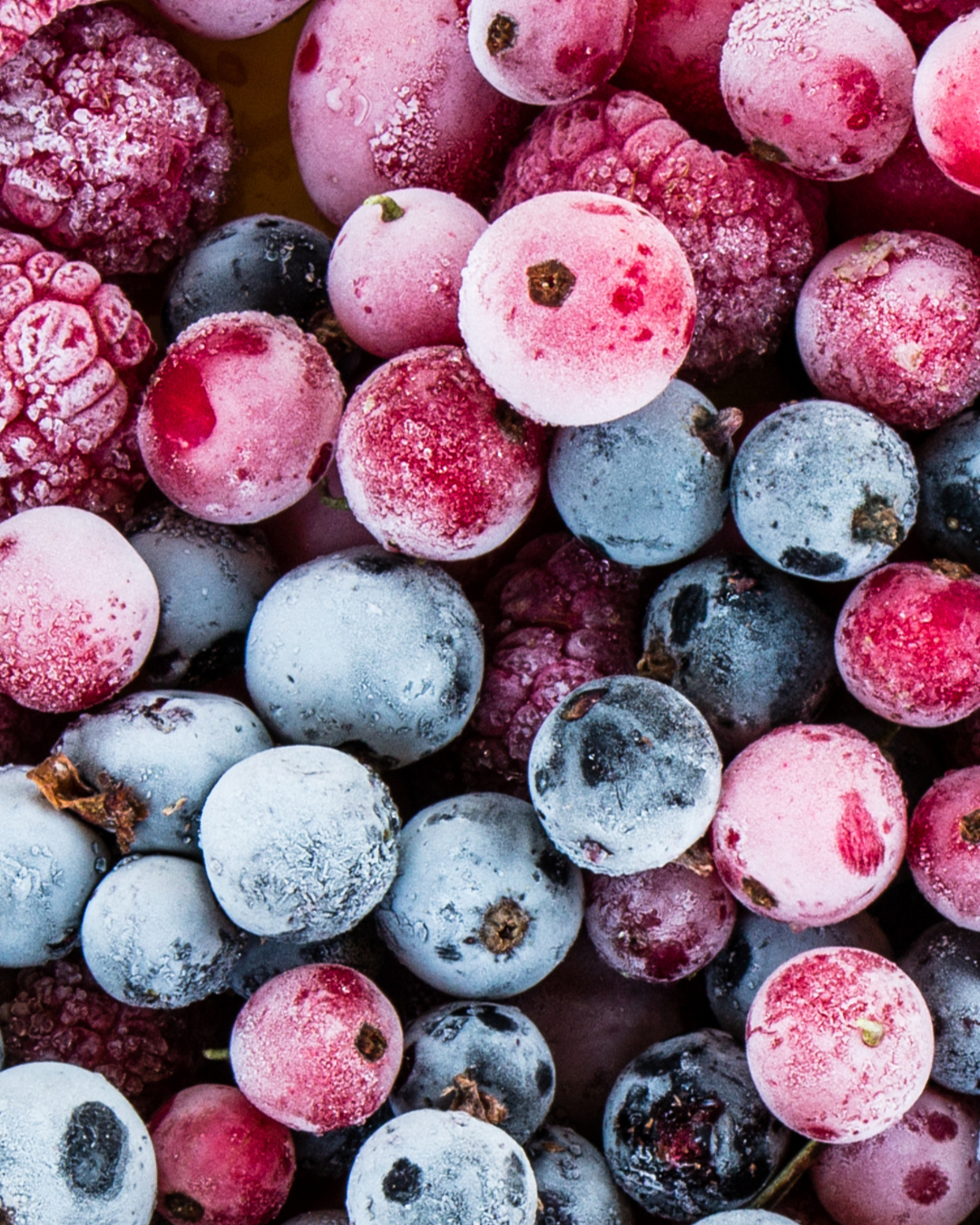
Berries are the standout here, especially for this stage of life — lower in sugar, higher in fiber than almost any other fruit, and packed with anthocyanins, the deep blue-purple-red pigments doing the real metabolic work. And this is where it gets good: in a gold-standard clinical trial, obese, insulin-resistant adults who had a daily dose of blueberry compounds for six weeks measurably improved their insulin sensitivity— while the placebo group didn't move at all. That study used concentrated blueberry, not a handful off the vine, so I won't pretend one bowl is a prescription. But it tells you these little pigments aren't just there for the color. A lower-sugar, high-fiber, polyphenol-rich fruit that also happens to be the cheapest, freshest thing in the freezer aisle? For a woman keeping an eye on her blood sugar in midlife, that's about as easy a yes as food gets.
If you've ever watched your own glucose after a smoothie — which is exactly what we do inside Clarity— you already know the punchline: it's rarely the fruit itself that spikes you. It's the portion, and what you did or didn't pair it with.
Which fruits are actually worth buying frozen?
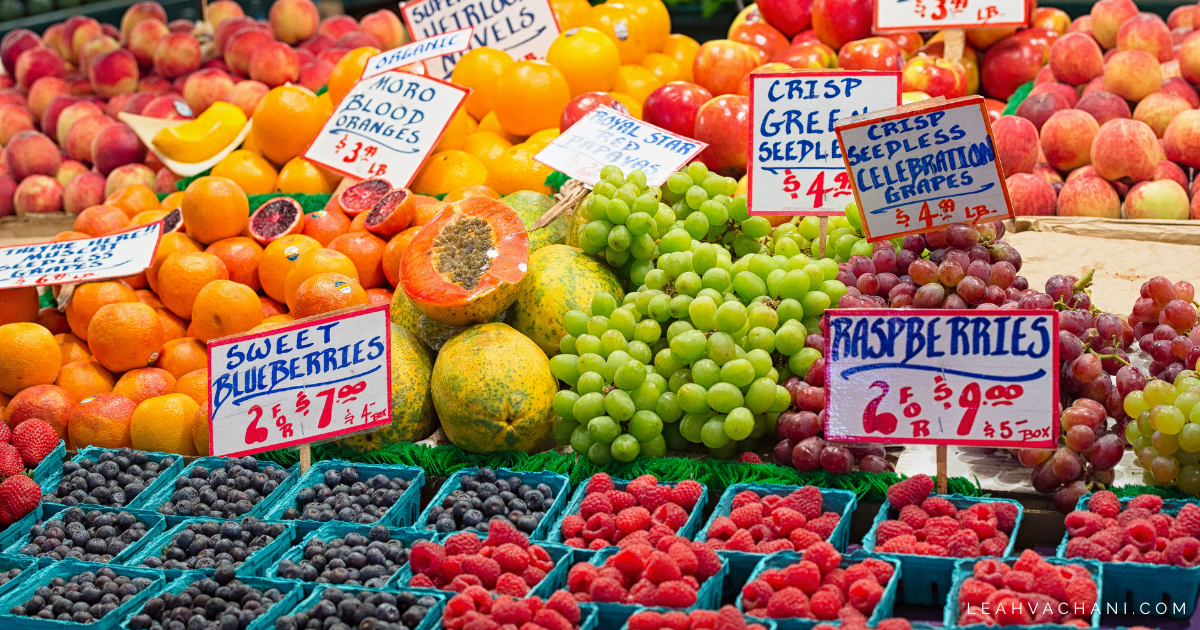
Not everything belongs in the freezer — but these seven are the ones I tell clients to grab frozen without a second thought. Here they are at a glance, roughly from lowest sugar to highest:
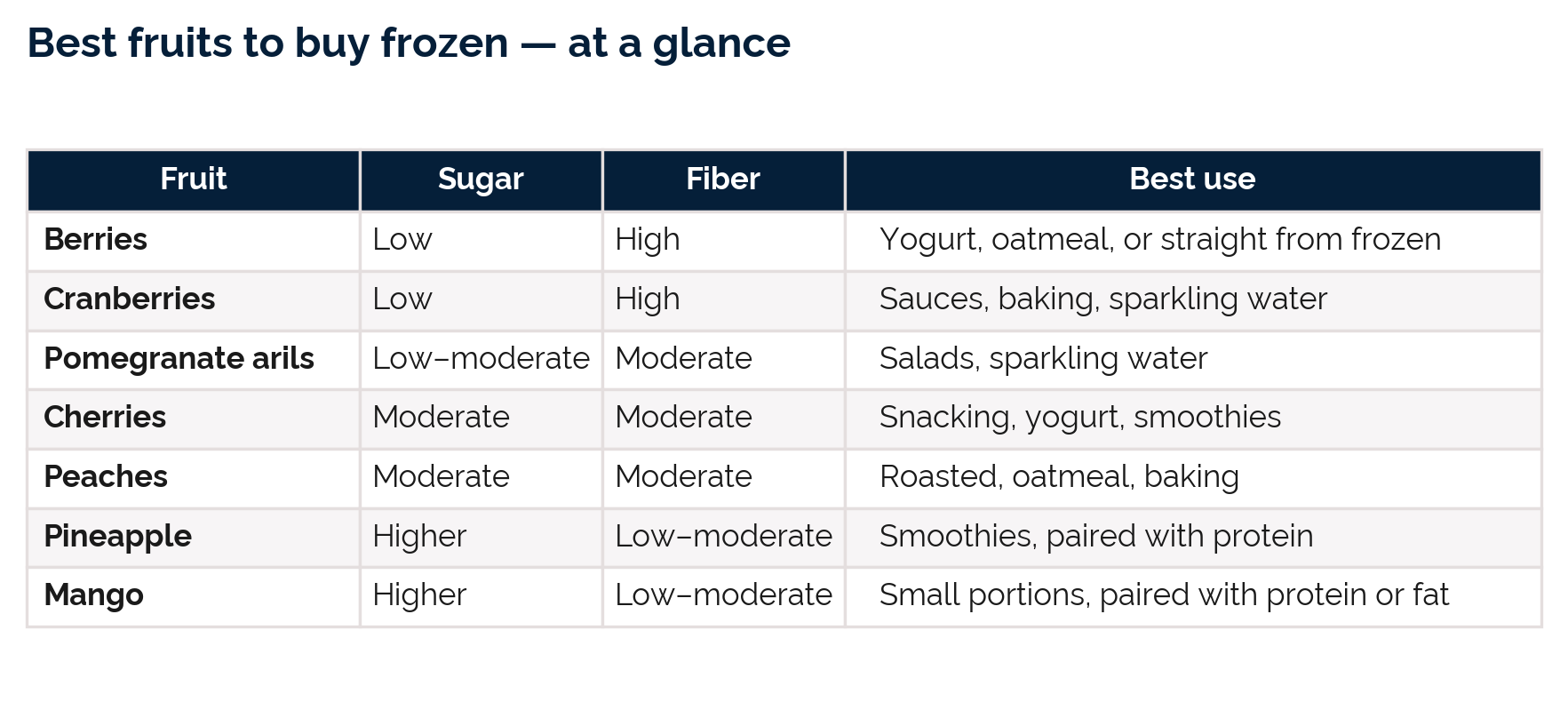
And here's the why behind each pick — because in midlife, the 'why' is what makes it stick:
Berries (blueberries, strawberries, raspberries, blackberries) —the ones I'd freeze first. Lower in sugar, high in fiber and anthocyanins, and notoriously quick to mold when fresh. Toss them frozen into Greek yogurt or oatmeal and they thaw in minutes.
Cherries —rich in the same anthocyanins as berries, plus a small natural source of melatonin, which is a nice bonus if midlife sleep has gotten unreliable. Pre-pitted frozen saves you a genuinely tedious job.
Mango —sweeter and higher in natural sugar, so this is a portion-and-pairing fruit. But it's a beta-carotene powerhouse, and frozen means it's picked ripe instead of the rock-hard version you fight with at the store.
Pineapple —high in vitamin C, which drops fast once it's cut. Freezing locks it in, and you skip the messy job of breaking down a whole one.
Peaches —they bruise and go mealy almost overnight when fresh. Frozen slices hold their vitamin C and their texture, and roast beautifully with a little cinnamon.
Cranberries —hard to find fresh outside the holidays, and the dried ones are usually drowning in added sugar. Frozen keeps them tart, low-sugar, and available all year.
Pomegranate arils —all those polyphenols without the kitchen crime scene of de-seeding one by hand. Great scattered frozen over a salad or into sparkling water.
How much frozen fruit should you eat in a day after 40?
For most women in midlife, one to two servings a day — roughly a cup total — sits comfortably in a blood-sugar-friendly range, especially when you lean on the lower-sugar fruits and pair them with protein or fat. The amount matters less than the pairing.
A serving of frozen berries is about three-quarters of a cup to a cup — a real handful, not the four-cup smoothie habit. What usually tips fruit from 'fuel' to 'spike' isn't the fruit itself; it's a large amount eaten alone, on an empty stomach, with nothing to slow it down. Stir a half to one cup of frozen raspberries into Greek yogurt and you've got fiber, protein, and fat working together to keep your energy flat and steady. Blitz two cups of mango with juice and nothing else, and you've built a sugar rush with no brakes. Same fruit, very different morning.
If you're not sure how your own body handles a given portion, that's the kind of thing worth watching in real time rather than guessing at — the right amount is a little different for every woman, and it can shift as you move through perimenopause and menopause.
Does frozen fruit spike blood sugar more than fresh?
No. It's the same fruit — freezing doesn't add sugar and it doesn't remove fiber. A frozen blueberry and a fresh blueberry behave the same way in your body. What actually moves your blood sugar is how much you eat and what you eat it alongside.
The one thing to watch is the label, not the temperature. Some frozen blends have added sugar or syrup, and a giant fruit-only smoothie — frozen or fresh — is a lot of fast sugar with nothing to slow it down. A cup of frozen berries stirred into a protein-forward breakfast is a completely different experience for your energy than the same berries blitzed alone into a 20-ounce drink. Same fruit. Very different afternoon.
What should you look for when buying frozen fruit?
Two things, and they're both quick to check on the bag.
First, a single ingredient. You want just the fruit — no added sugar, syrup, or 'fruit blend' with mystery sweeteners. If the ingredient list is longer than the name of the fruit, put it back.
Second, organic where your budget allows, especially for the thin-skinned fruits. Berries, cherries, and peaches tend to carry more pesticide residue and regularly show up on the Environmental Working Group's Dirty Dozen list. This is actually where frozen is a gift: organic fresh berries can cost a small fortune, but organic frozen is often a fraction of the price, which makes the cleaner choice the affordable one for once.
And a quiet bonus most people forget — buying frozen means you stop throwing food away. The USDA estimates that somewhere around 30 to 40 percent of the U.S. food supply goes uneaten, and fresh fruit is one of the biggest offenders. Frozen lets you use exactly what you need and leave the rest on pause. Better for your body, and easier on the grocery bill.
A pattern I see with almost every client
When we start working together, a lot of women tell me — a little sheepishly — that they buy frozen fruit but assume it's the 'lesser' choice, like they're cutting a corner. There's real guilt attached to it, this sense that a good, healthy woman buys the fresh clamshell even though half of it rots in the drawer. I've watched that guilt melt the moment they see the research. Frozen isn't the compromise. For most of the fruit we actually eat, it's the smarter version — and one less thing to feel bad about is worth a lot in midlife.
Frequently asked questions about frozen fruit
Is frozen fruit as healthy as fresh fruit?
For most store-bought fruit, yes — and sometimes healthier. Frozen fruit is picked ripe and frozen quickly, while fresh fruit loses nutrients during shipping and fridge storage. Fruit from your own garden or a peak-season farm stand still wins, but that's not what most of us are buying.
Does freezing destroy the fiber in fruit?
No. Fiber is stable through freezing and thawing. That's a big part of why frozen fruit still helps steady your blood sugar — the fiber that slows sugar absorption stays fully intact.
Is frozen fruit okay if I'm watching my blood sugar?
Absolutely. Choose lower-sugar options like berries and cranberries, keep the portion reasonable, and pair fruit with protein or fat rather than eating it alone. That combination — not fresh versus frozen — is what keeps your energy steady.
How long does frozen fruit actually last?
Kept consistently frozen, most fruit holds its quality for roughly eight to twelve months. The nutrients are stable far longer than the few days you'd get from the same fruit fresh in the fridge.
Should I thaw frozen fruit first or use it frozen?
Either works. Use it frozen for smoothies, or stir it into warm oatmeal and let it thaw in seconds. For yogurt bowls, a few minutes on the counter softens it nicely. Thawing doesn't cost you meaningful nutrition.
If this shifted how you think about the freezer aisle, you'll like my podcast episode on whether fruit is actually healthy for you— it goes deeper on the sugar question for women over 40. And when you're ready to stop guessing how your own body handles food and start seeing it in real time, that's exactly what Clarity is built for.
Your body isn't broken — it's just been ignored.
About the author
Leah Vachani is a Certified Nutritionist, Menopause Specialist, and Metabolism Coach, and the host of the Women Aging Powerfully podcast. She helps women 40+ understand what's actually happening with their metabolism, hormones, and energy — without dogma, fear, or shame. Her signature program, Clarity, uses each woman's own real-time glucose data to find the metabolic sweet spot where energy, focus, sleep, and weight finally click. She believes the goal isn't a smaller body; it's a body you understand.
A quick note from me: I'm a certified nutritionist and menopause specialist, but I'm not your doctor — and this post isn't a substitute for personalized medical care. The information here is meant to inform and empower you, not replace a conversation with your healthcare provider. Always check in with your team before making changes to your diet, supplements, or lifestyle. Take what serves you, leave what doesn't, and trust yourself.
Sources & research
Bouzari, Holstege & Barrett (2015). Vitamin Retention in Eight Fruits and Vegetables: Refrigerated vs. Frozen Storage. J. Agric. Food Chem.
Bouzari, Holstege & Barrett (2015). Mineral, Fiber, and Total Phenolic Retention: Refrigerated vs. Frozen Storage. J. Agric. Food Chem.
Li, Pegg, Eitenmiller, Chun & Kerrihard (2017). Selected Nutrient Analyses of Fresh, Fresh-Stored, and Frozen Fruits and Vegetables. J. Food Composition and Analysis.
Stull et al. (2010). Bioactives in Blueberries Improve Insulin Sensitivity in Obese, Insulin-Resistant Men and Women. J. Nutrition.
Solverson et al. (2019). An Anthocyanin-Rich Mixed-Berry Intervention May Improve Insulin Sensitivity. Nutrients.
Monro et al. (2022). Dietary Fibre Suppresses Glycaemic Response by Delaying Absorption. Nutrients.
Lustig, R. (2021). Metabolical— on whole fruit, protective fiber, and fructose.
Bikman, B. (2020). Why We Get Sick— on insulin resistance and why keeping insulin low matters.
Environmental Working Group —Dirty Dozen.
USDA —Food Loss and Waste FAQs.
Every claim in this post was fact-checked against primary sources before publishing. Where the science is still emerging — as with berries and insulin sensitivity — we say so plainly rather than overstating it.